Contents
Our client was handling more than 300 orders per day through a combination of emails, Excel spreadsheets, and phone calls. Every order passed through three different people before reaching the warehouse. Mistakes were frequent, delays had become the norm, and the team was spending hours each day on tasks that added no real value.
The problem was not a lack of effort or commitment. It was that the processes were not built for the volume the company was handling.
Before proposing any solution, we spent time understanding how the order flow actually worked. This is what we found:
Manual order intake: customers placed orders by email, WhatsApp, and phone. Each channel required someone to review it and transcribe the information by hand.
No centralised status: there was no single source of truth. Each team member had their own version of where each order stood.
Reactive notifications: customers called to ask about their orders because no one was proactively keeping them informed.
Coordination over chat: the warehouse team received instructions via WhatsApp. Messages got lost, were misread, and caused errors.
Delayed invoicing: invoices were generated days after delivery because the process was manual and depended on someone remembering to do it.
The real cost was not in the tools they were using. It was in the human time consumed by every one of these steps.
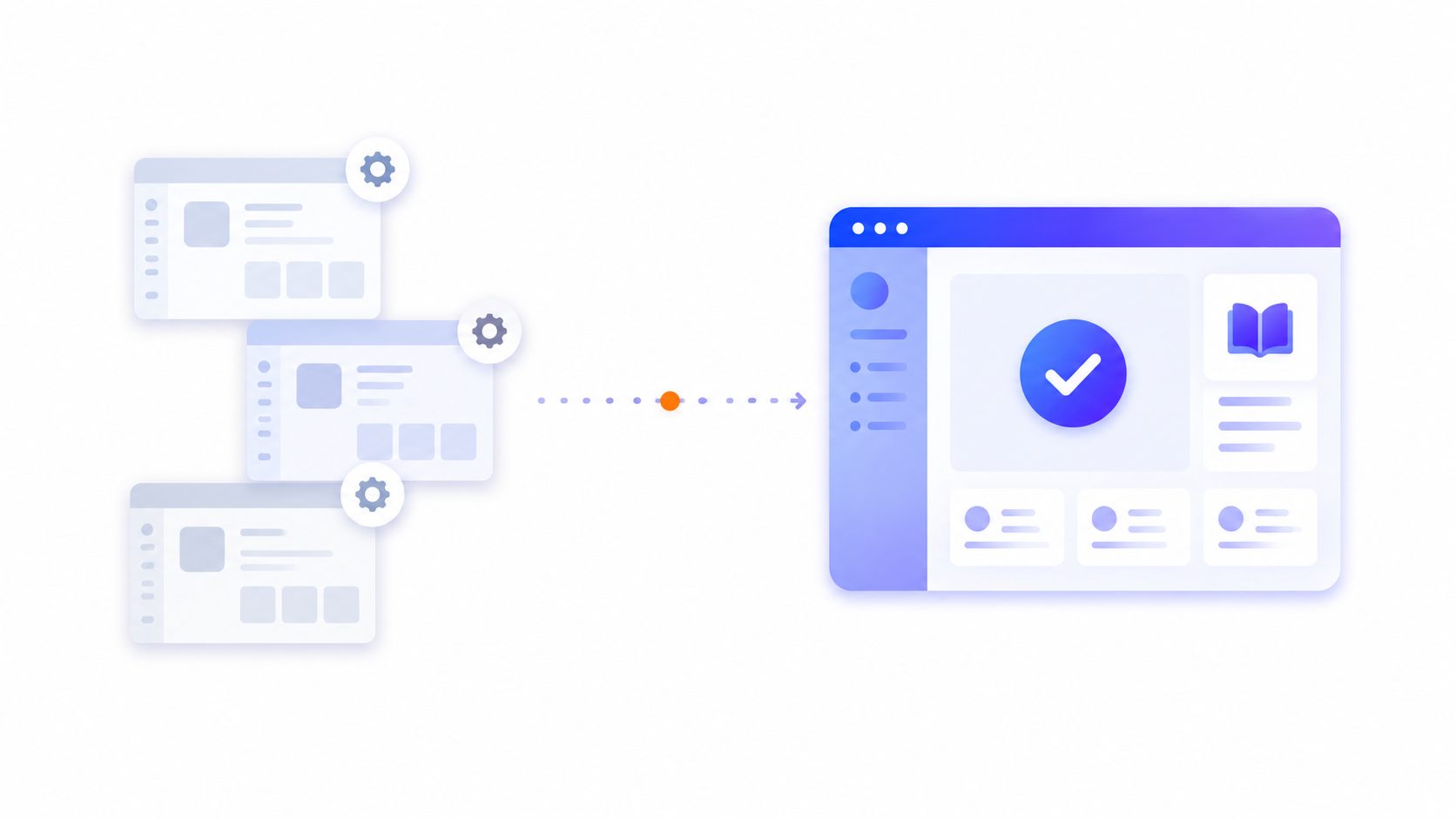
We did not build a new system from scratch. We connected what already existed and added the missing logic.
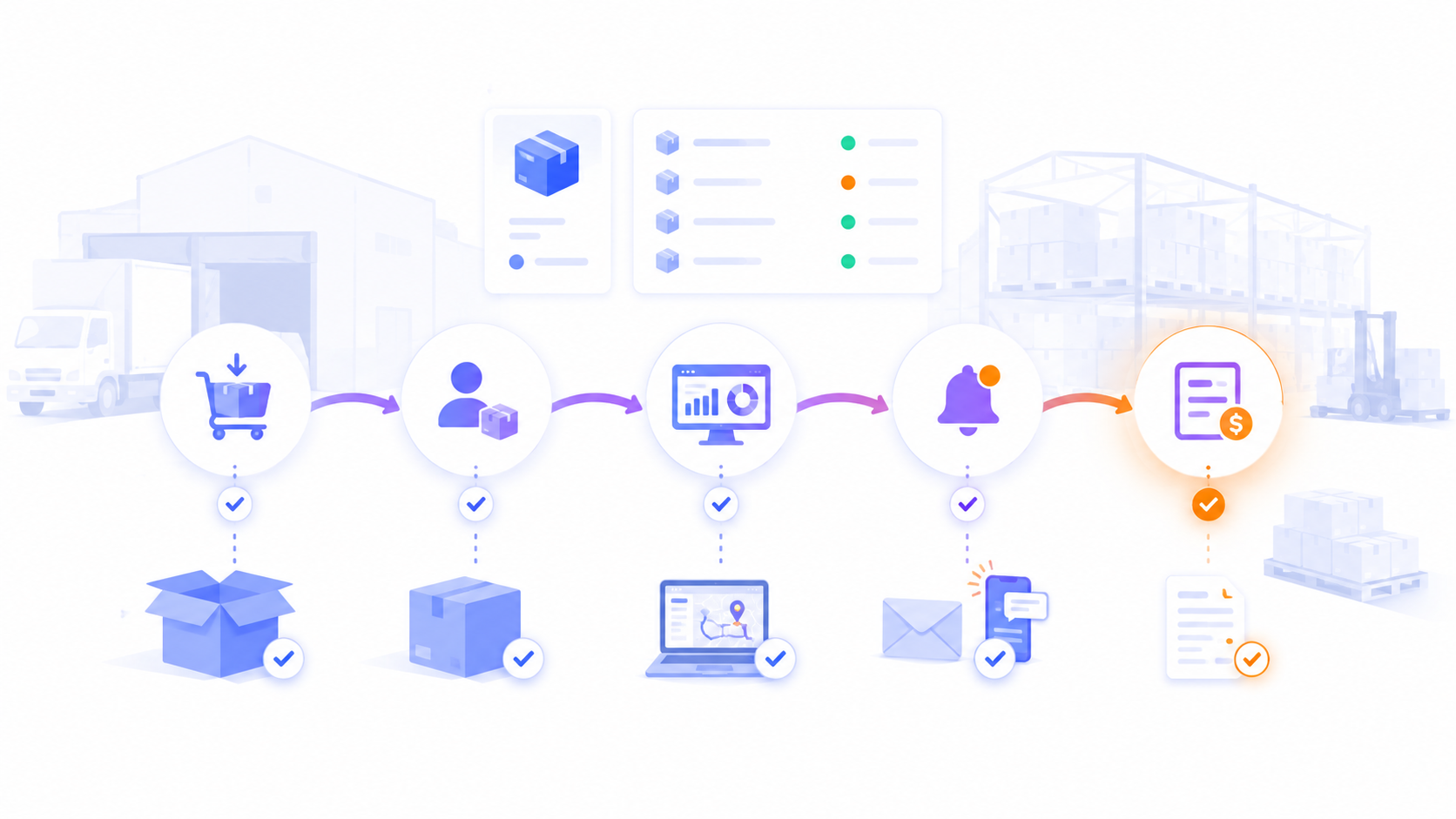
We integrated the different input channels (web form, email, customer portal) into a single central system. Every order, regardless of origin, arrived in the same format and automatically created a record in the database.
Based on order type, weight, delivery area, and warehouse availability, the system automatically assigned each order to the right team. No human intervention required for standard cases.
We built an internal dashboard where the entire team could see the live status of every order: received, in preparation, ready to ship, shipped, delivered. No need to ask anyone.
At each relevant status change, the customer automatically received a notification by email or SMS. No more incoming calls asking when an order will arrive.
When an order was marked as delivered, the system automatically generated the delivery note and invoice and sent them to the customer without anyone having to do anything.
The stack we chose was simple, robust, and easy to maintain:
Node.js backend with a PostgreSQL database for order records.
React internal dashboard with real-time updates.
n8n for flow automation, notifications, and routing logic.
API integration with the company's existing invoicing tool.
There was no need to replace the invoicing software the company already used. We connected it and made it communicate with the new system.
70% reduction in time spent on administrative order management by the team.
Near-complete elimination of manual transcription errors, which had previously occurred several times per week.
80% drop in customer calls asking about order status.
Same-day invoicing on the day of delivery, compared to the previous average of 3 to 5 days.
The team grew in capacity without growing in headcount: they handle more orders with the same people.
Automation does not always mean building something new. Sometimes it means connecting what already exists, removing steps that add no value, and giving people the tools to do their jobs without friction.
Manual processes do not scale well. They work when the company is small and volume is manageable. But as volume grows, the system starts to crack. And fixing it later costs more than solving it earlier.
If your company manages orders, requests, incidents, or any operational flow using Excel, email, or WhatsApp, you are probably already paying the cost of not automating. The question is not whether to automate, but when.
Tell us how your operation works and we will show you what can be automated in your specific case.
It depends on order volume, intake channels, and the systems already in place. A basic order flow automation project with standard integrations can start from 1,500€. Projects involving more complex integrations or custom dashboard development typically range from 5,000€ to 20,000€.
In most cases, no. If your invoicing tool has an API or supports integrations, we connect it to the new system without replacing anything. The goal is to make what you already have work better, not to replace it.
A basic flow can be live in 4 to 6 weeks. If the project includes dashboard development, legacy system integrations, or advanced customisation, the typical timeframe is 8 to 12 weeks.
Building on a solid technical foundation means the system scales without needing a redesign. You can add channels, routing rules, or new flows without affecting what is already running.
Yes. The pattern is the same for any company managing repetitive flows: service requests, incidents, purchase orders, or bookings. If a process follows defined steps and repeats frequently, it can be automated.
If your team regularly spends time on manual, repetitive tasks, if human errors are frequent, or if the current system cannot handle the volume, you are ready. You do not need advanced technology infrastructure to get started.
Our clients' satisfaction is our best introduction.
"Tengo un negocio de Paquetería, en el que vienen muchas personas diariamente, tanto para recoger como para dejar paquetes. Llevábamos años gestionando muchos de nuestros procesos de paquetería de forma manual, y gracias a Blimbur Technologies hemos dado un salto enorme. Nos desarrollaron una app móvil y una web totalmente adaptadas a nuestro flujo de trabajo, con las que ahora tenemos todo automatizado, trazable y mucho más rápido. Ahora, el cliente sabe si tenemos el paquete y al estar todo mucho más organizado, es mucho más rápido y ágil, lo que hace que los clientes vengan y se vayan con otra cara y sin esperas. El trato ha sido impecable y el resultado, todavía mejor. Un equipo serio, técnico y que se implica de verdad."