Contents
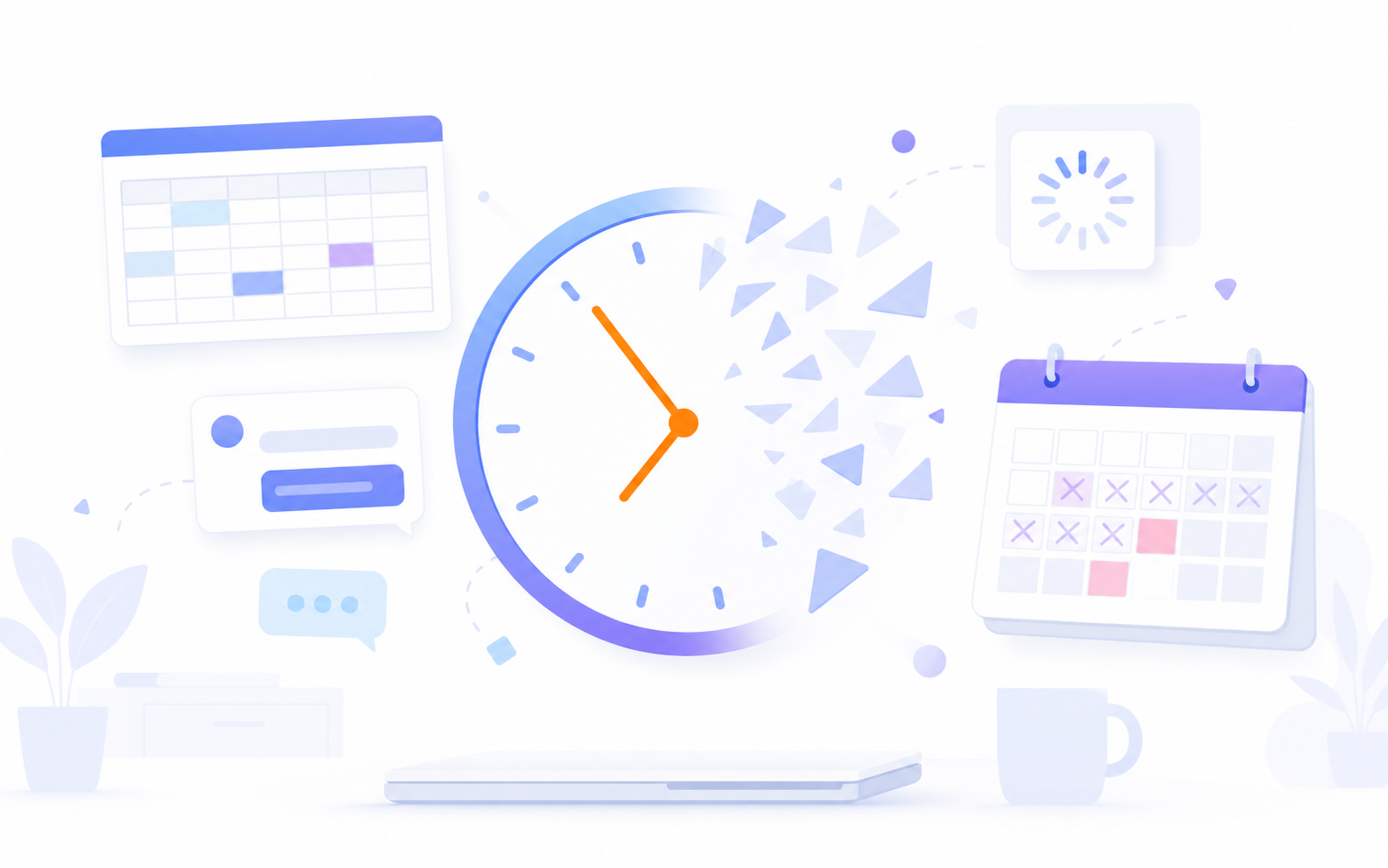
Every 1st of May, International Workers' Day invites us to reflect on the value of work and the conditions in which it takes place. But there is a conversation most companies never have: how many hours their team loses every day to tools that simply are not up to the job.
We are not talking about rest time or excessive workloads. We are talking about silent friction: the kind generated by slow software, a process that still runs through email, a spreadsheet nobody fully understands but everyone uses, a tool that forces people to enter the same information in three different places.
That friction never appears in any report. But it is there, every single day.
There is a type of time loss that is particularly hard to detect because it never presents itself as a problem. It presents itself as "that's just how things work here."
A sales rep who spends twenty minutes preparing a quote because the system does not generate templates automatically. A warehouse manager who cross-references two spreadsheets at the end of each day to find out what stock they actually have. A customer support team handling messages across WhatsApp, email, and phone with no centralised record, repeating the same information over and over.
These situations share one thing: nobody puts them on the table because they have been normalised for so long. And yet they are consuming real working hours, every day, from people who could be doing something else.
Putting an exact number on this is hard because it depends on the sector, team size, and specific processes of each company. But some reference data helps put it in perspective:
According to a Smartsheet workplace automation report, over 40% of employees spend at least a quarter of their working week on manual, repetitive tasks. A McKinsey Global Institute report estimates that up to 30% of current work hours could be automated with generative AI.
In companies with non-digitalised processes, searching for and managing information can consume between 1.5 and 2.5 hours per person per day.
Errors resulting from manual data entry or unvalidated processes generate rework that, depending on the context, can account for 10% to 25% of a team's total time.
If you have a team of ten people and each one loses an hour a day to avoidable friction, you are losing fifty hours a week. More than two full-time employees working on nothing productive.
Certain patterns repeat themselves across companies of different sectors and sizes:
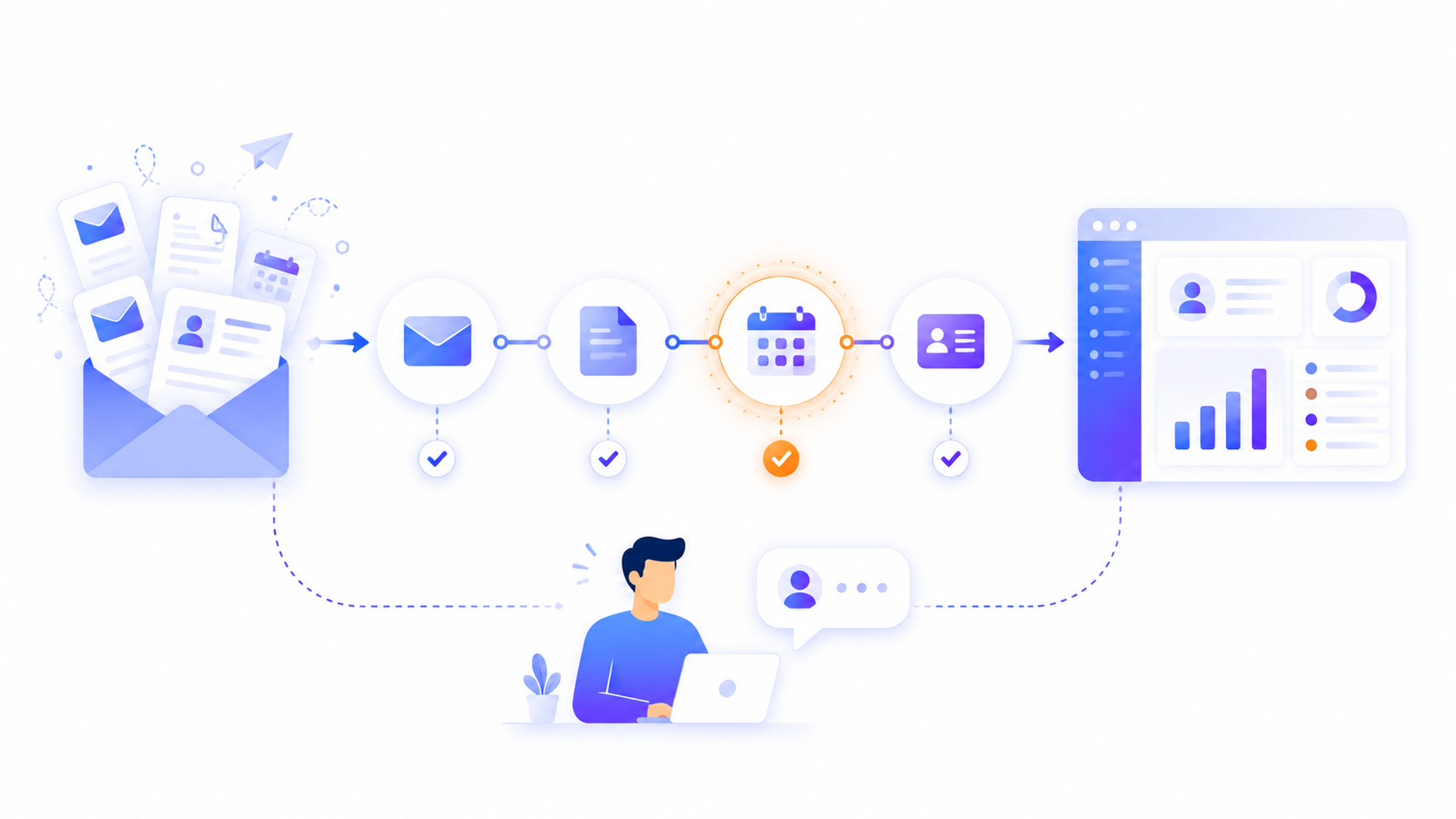
Software that does not talk to other software: when tools are not integrated, someone has to act as the bridge manually. That invisible work exists in most companies.
Approval processes that have not been automated: validations that depend on someone remembering to send an email, check a sheet, or update a status.
No real-time visibility: when there is no centralised system, managers spend time requesting information that should be available automatically.
Tools designed for something else: using WhatsApp as a CRM, Excel as a database, or email as a task manager creates chaos as the company grows.
Outdated software nobody wants to touch: systems that have not been maintained in years, slow and unstable, forcing teams to work around them with manual processes.
The problem is not just the time. It is what that time represents.
A person who spends two hours a day entering data manually is not just losing time: they are being pulled away from tasks where they could add real value. They are accumulating frustration. And in many cases, they are making errors that someone else will have to fix later.
Inadequate software carries a direct cost in hours, an indirect cost in work quality, and a human cost in the form of teams who feel poorly supported by the tools they are given.
In the context of Workers' Day, it is worth asking: are we investing in the actual conditions our team works in?
Not every inefficiency calls for a custom software project. But there are clear signals that the time has come to consider it:
Key processes in your company depend on a specific person doing something manually and remembering to do it.
Onboarding new employees is slow because processes are not documented or systematised.
The team regularly spends time on tasks that add no direct value: cross-referencing data, updating records, forwarding information.
Operational errors have a recurring root cause that has never been addressed at the system level.
The current software has not grown with the company and is increasingly a limitation rather than a support.
When more than two of these are a regular reality, the cost of not acting already exceeds the cost of finding a solution.
The first step is not to commission a development project. It is to make an honest diagnosis of where the time is actually going.
Talk to the people who execute the processes, not just the ones who oversee them. Ask what tasks repeat, what things they do manually that they feel they should not have to, what information is missing or arrives late. That map of friction is the starting point for any real improvement.
From there, the options vary: automating specific processes with tools like n8n, integrating systems that already exist but do not communicate, improving existing software, or building something custom if no existing solution fits the business.
At Blimbur we work with companies at exactly that point: they know something is not working well, but they are not sure what to change or where to begin. If that sounds familiar, we can help you identify where the real losses are and what would have the most impact to fix first.
Tell us how your team works today and we will help you find where the time is really going.
It depends on the sector and team size, but research places between 20% and 30% of the working day on repetitive manual tasks that could be automated. In a team of ten people, that can add up to the equivalent of more than two full-time employees working on tasks that add no real value.
The most common are manual data entry, searching for and cross-referencing information across tools that are not integrated, approval processes that depend on emails or manual messages, and task management through tools not designed for it — WhatsApp, Excel, email.
In most cases, it is both. Inadequate software creates bad processes, and bad processes become entrenched because the software never resolves them. A clear signal is when processes depend on a specific person remembering to do something, or when onboarding a new team member takes weeks because nothing is systematised.
Not necessarily. In many cases it is enough to integrate tools that already exist, automate specific workflows with solutions like n8n, or add a layer that centralises information. The starting point is identifying where the real losses are — not replacing entire systems without a prior diagnosis.
The range is wide. A simple automation can cost between 500€ and 1,000€. Medium automation projects range from 2,000€ to 5,000€. Complete automation projects start from 8,000€. The cost should always be weighed against what the manual process is actually costing in real hours every month.
Our clients' satisfaction is our best introduction.
"Tengo un negocio de Paquetería, en el que vienen muchas personas diariamente, tanto para recoger como para dejar paquetes. Llevábamos años gestionando muchos de nuestros procesos de paquetería de forma manual, y gracias a Blimbur Technologies hemos dado un salto enorme. Nos desarrollaron una app móvil y una web totalmente adaptadas a nuestro flujo de trabajo, con las que ahora tenemos todo automatizado, trazable y mucho más rápido. Ahora, el cliente sabe si tenemos el paquete y al estar todo mucho más organizado, es mucho más rápido y ágil, lo que hace que los clientes vengan y se vayan con otra cara y sin esperas. El trato ha sido impecable y el resultado, todavía mejor. Un equipo serio, técnico y que se implica de verdad."