Contents
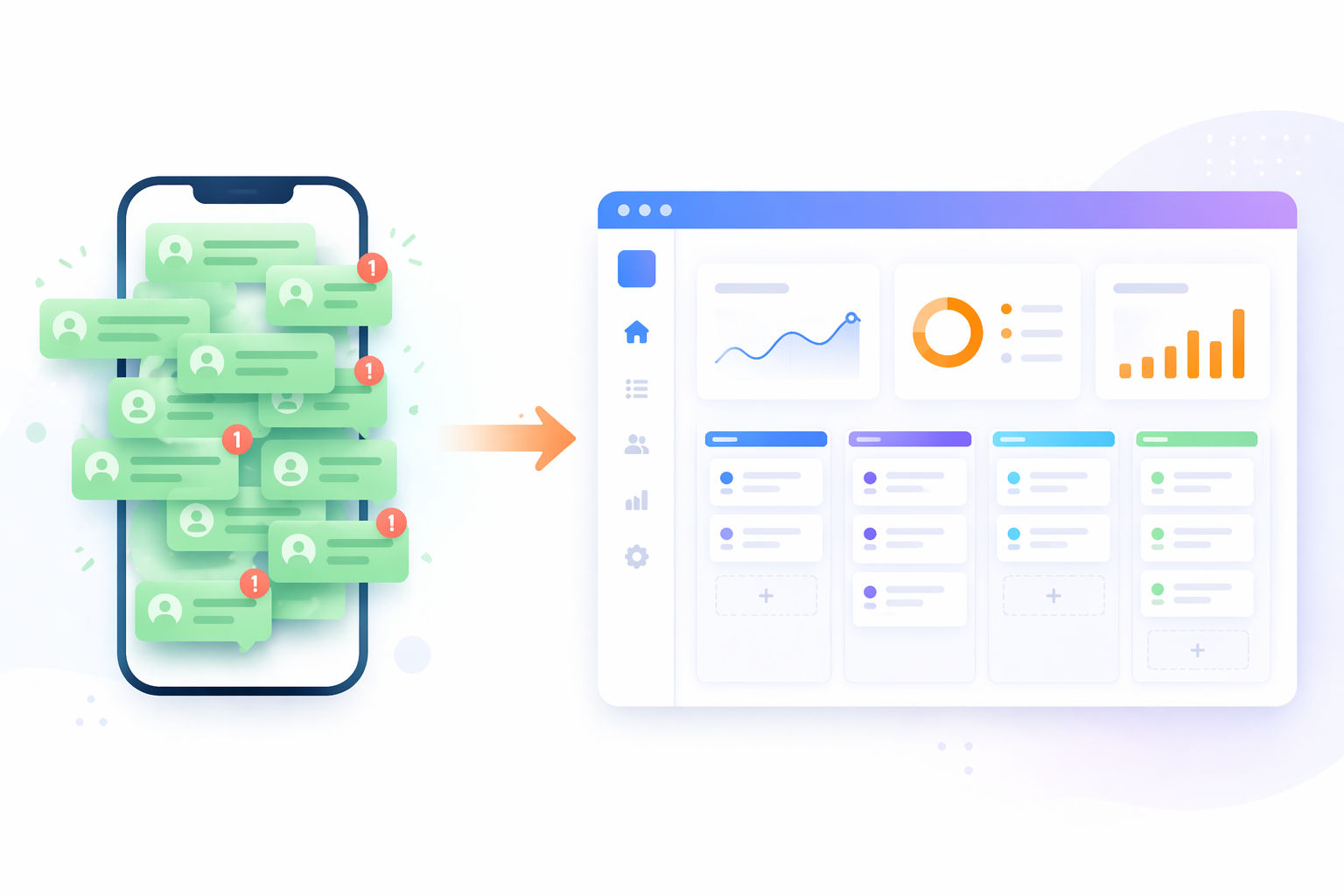
There is a pattern that repeats itself across dozens of companies. It starts innocently enough: someone creates a WhatsApp group to coordinate orders, incidents, or customer requests. It works. The team adopts it. Customers follow. And before long, that group has become the operational backbone of the business.
The problem is not WhatsApp itself. The problem is that when an informal messaging channel becomes critical infrastructure, the business starts depending on something that was never designed for that role. And that comes with a cost paid every single day.
When a team runs its operations through WhatsApp, it feels agile. Messages arrive fast, everyone sees them, responses are immediate. But beneath that surface, a series of problems quietly accumulate:
No traceability. Who handled that request? When? What was agreed? It is somewhere in a message from three weeks ago that nobody will find.
No data. How many orders come in per week? What is the average response time? Which issues repeat most often? None of that exists as a figure you can query.
Knowledge walks out the door. When someone leaves the company, they take the chats, the context, and the implicit agreements with them.
It does not scale. What works at 50 messages a day breaks down at 300.
It is fragile. A blocked account, a broken phone, or a change in WhatsApp's policies can paralyse entire operations.
Not every company needs a dedicated platform from day one. But there are clear signals that the moment has arrived:
Message volume exceeds what one person can manage with real attention.
Errors are happening due to lack of visibility: duplicate orders, unanswered requests, confusion between versions of the same agreement.
The team spends time searching for information inside chats instead of acting on it.
Customers expect a level of service that WhatsApp cannot reliably deliver.
The company wants to grow and knows it cannot scale on this foundation.
If you recognise more than two of these situations, the problem is not operational. It is structural.
This is not about recreating WhatsApp on a different screen. It is about rethinking the entire process and building a tool that supports it natively.
Depending on the type of business, this can take very different shapes:
For businesses handling customer orders or requests: a portal where the customer submits their request, the team sees everything centralised, can assign it, update its status, and the customer receives automatic notifications without needing to ask.
For internal operations teams: a dashboard where every task has an owner, a status, and a history. No lost messages, no "can anyone look into this?"
For service businesses with appointments and bookings: a scheduling system with automatic confirmations, reminders, and real-time team visibility.
For businesses with approval workflows: a tool where each request moves through defined steps, with the right people involved, without depending on someone being connected to the group at the right moment.
The most common mistake is starting with the technology. "Which platform should we use?" is the wrong question. The right question is: "What is the exact flow that needs to work?"
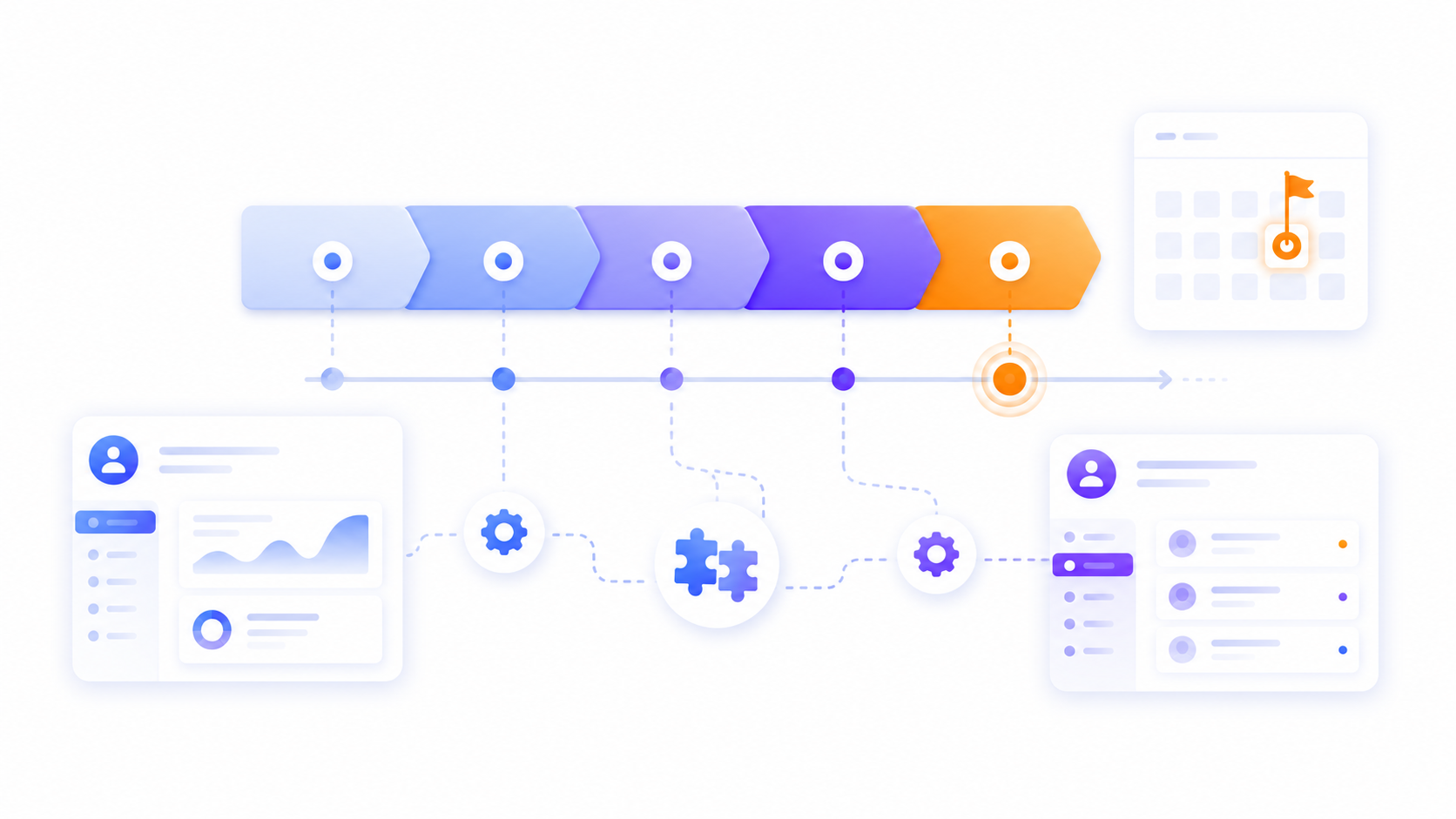
The typical process has three phases:
Mapping the current process: documenting how the flow works today — its steps, its actors, and its failure points. This usually reveals that the WhatsApp process is more complex than it appears, with exceptions and implicit decisions that nobody has ever put into words.
Designing the new process: before writing a single line of code, defining how that flow should work on a digital platform. What states it has, who can do what, what notifications are sent and when.
Phased development: starting with the core functional flow before adding integrations, automations, or additional features. A well-built MVP solves the central problem and provides the foundation for iteration.
The honest answer is: it depends on the case. For mid-sized internal platforms, a web application with React or Next.js on the frontend and Node.js on the backend covers most needs. If there is a significant mobile component, Flutter allows building a native app without duplicating development effort.
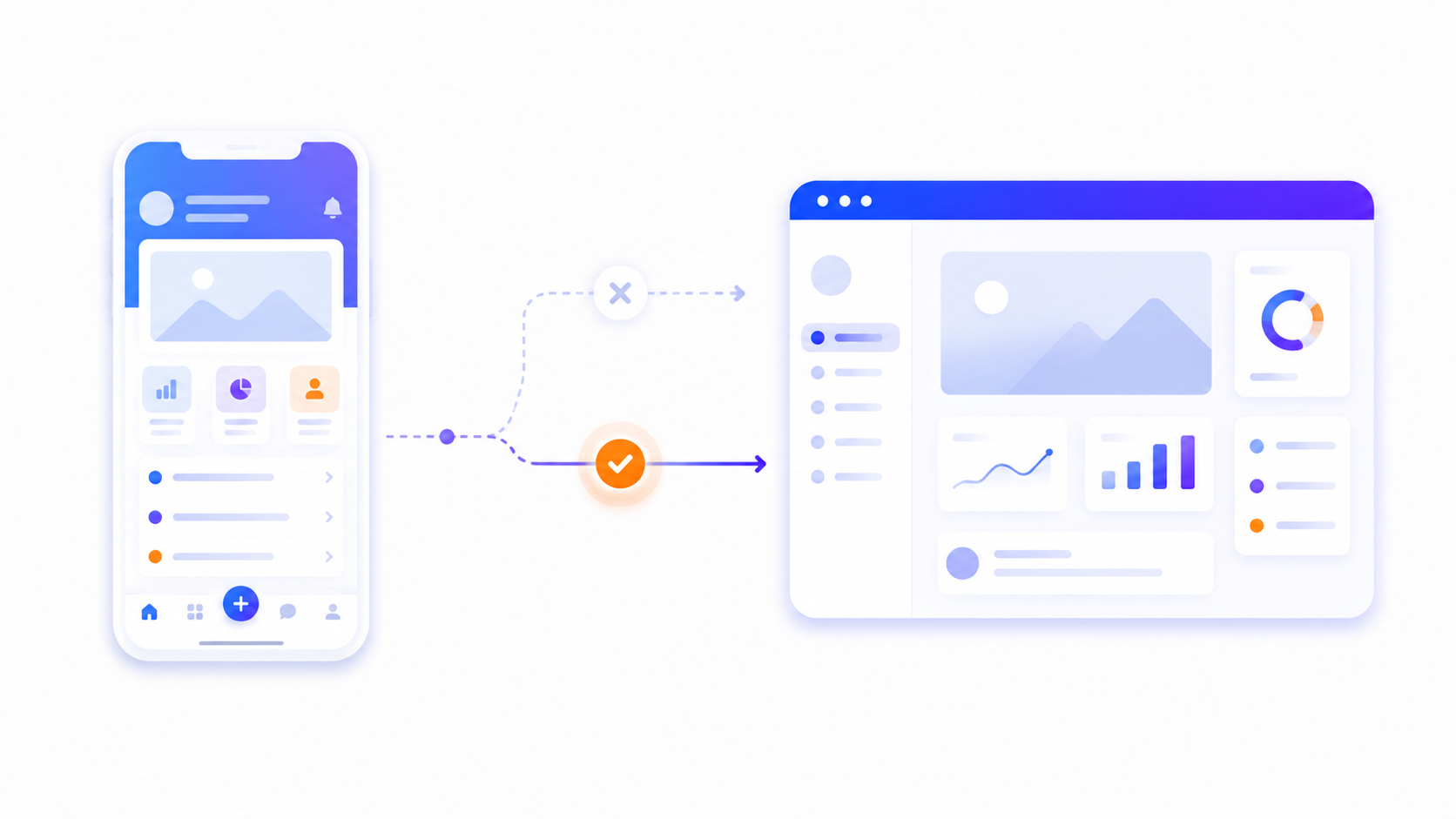
For flows that combine WhatsApp with a dedicated platform, it is possible to keep receiving messages via WhatsApp (through the WhatsApp Business API) while agents work from a centralised dashboard. This eases the transition for customers already accustomed to the channel.
Automating parts of the flow with tools like n8n can add notifications, synchronisations, and triggers without additional custom code.
Conversations about digitalising a process tend to stall at the cost of development. But the cost of continuing as before is rarely quantified: team hours lost searching for information, errors that generate complaints, customers who leave because service does not respond, growth opportunities that cannot be seized because operations cannot handle more volume.
A dedicated platform is not an expense. It is the infrastructure that makes it possible to grow in an orderly way.
If you have a process that currently lives in WhatsApp and you are assessing what it would take to turn it into something more solid, we can help you understand the technical implications and what it would cost.
Because what works at a certain volume stops working as the business grows. WhatsApp has no traceability, generates no queryable data, and depends on people being available at the right moment. The right time to address this is before growth creates serious problems, not after.
It depends on the complexity of the process. A basic internal platform with one core flow can start from 3,000€. More complex projects with integrations, multiple roles, or a mobile component can exceed 15,000€. The most useful step is to analyse the specific case before giving figures.
For a well-defined core flow, between 6 and 10 weeks including the design phase. The timeline increases if the process has many exceptions, integrations with external systems, or if a mobile app is needed alongside the web platform.
Yes. It is possible to integrate the WhatsApp Business API with a custom platform so that customer messages arrive in a centralised dashboard where the team manages them. The customer keeps using WhatsApp, but internal operations run in an organised and traceable way.
Historical chats cannot be migrated directly into a new platform. The usual approach is to set a cutover date and start operating with the new tool from that point, while keeping access to old chats as reference during a transition period.
It depends on how the platform is designed. A tool built specifically for the use case is usually simpler to use than WhatsApp for operational tasks, because it removes noise and shows only what is relevant to each person. The learning curve is low if the design is right.
Our clients' satisfaction is our best introduction.
"Tengo un negocio de Paquetería, en el que vienen muchas personas diariamente, tanto para recoger como para dejar paquetes. Llevábamos años gestionando muchos de nuestros procesos de paquetería de forma manual, y gracias a Blimbur Technologies hemos dado un salto enorme. Nos desarrollaron una app móvil y una web totalmente adaptadas a nuestro flujo de trabajo, con las que ahora tenemos todo automatizado, trazable y mucho más rápido. Ahora, el cliente sabe si tenemos el paquete y al estar todo mucho más organizado, es mucho más rápido y ágil, lo que hace que los clientes vengan y se vayan con otra cara y sin esperas. El trato ha sido impecable y el resultado, todavía mejor. Un equipo serio, técnico y que se implica de verdad."