Contents
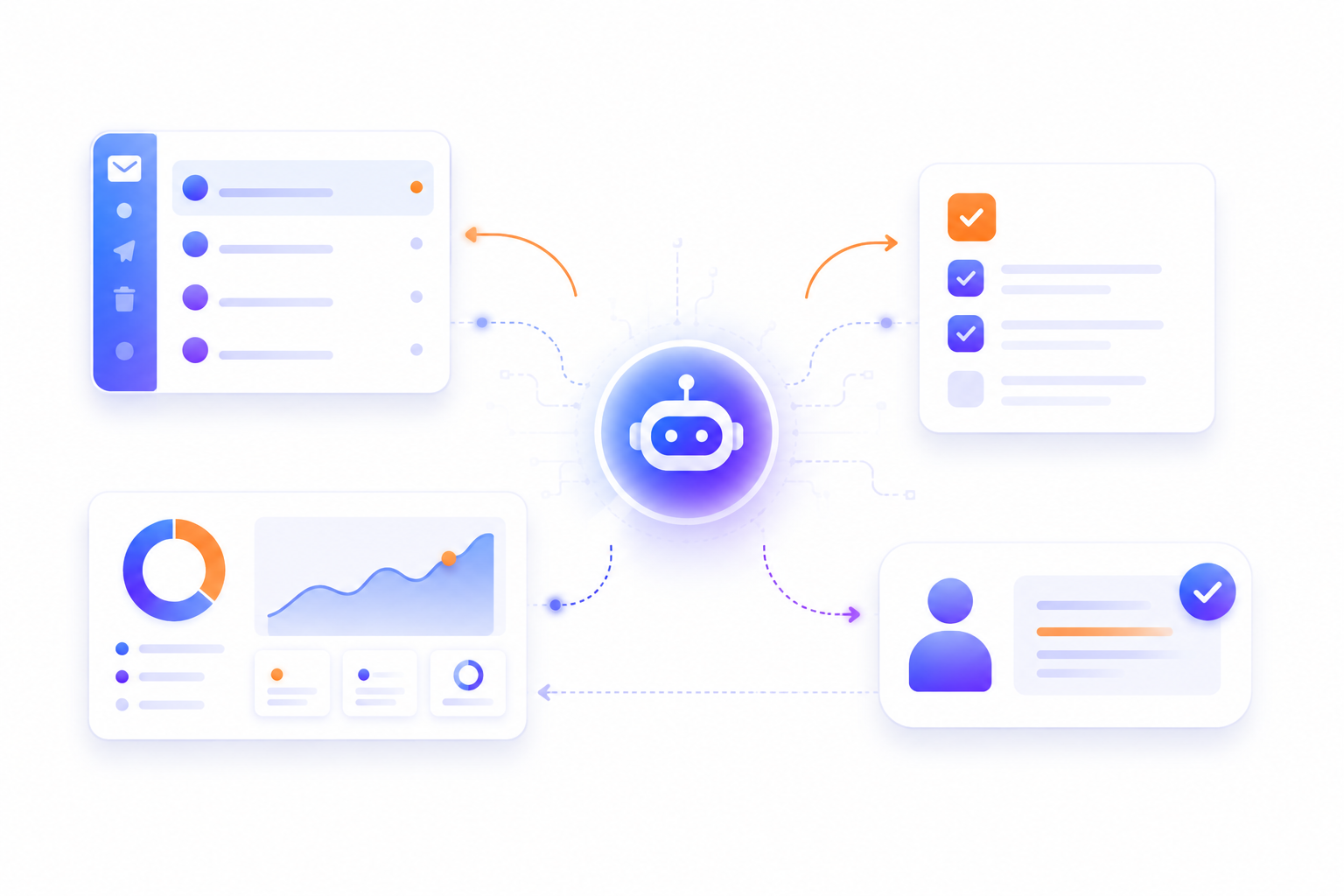
For years, whenever a company needed to connect two systems, eliminate a manual process, or build an automated workflow, the only way forward was hiring a developer. That has changed. Tools like n8n make it possible to build complex automations visually, without writing a single line of code.
But this does not mean developers are no longer needed. It means the decision of when to use each option has become more important than ever. Getting it wrong can cost you time, money, or both.
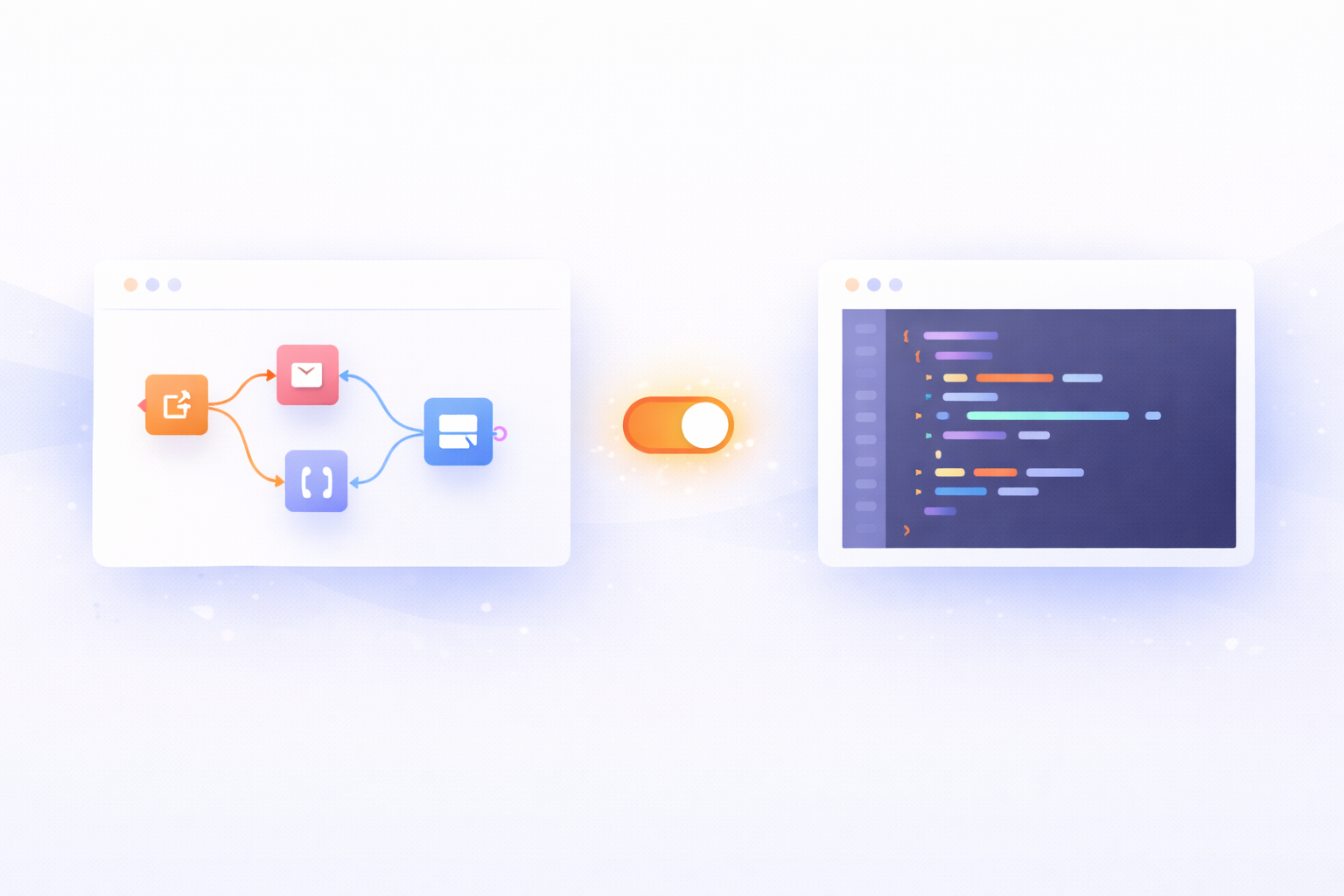
n8n is an open-source workflow automation platform. It works by connecting nodes — each node represents an action or a system — and you define how they relate to each other through a visual interface.
With n8n, you can among other things:
Sync data between CRMs, ERPs, or databases.
Send automatic notifications via email, Slack, or WhatsApp when something happens.
Process form submissions and distribute information across systems.
Build internal approval or tracking workflows.
Connect SaaS tools that have no native integration with each other.
Schedule recurring tasks such as reports or data updates.
For these kinds of needs, n8n is generally faster, cheaper, and easier to maintain than custom development.
n8n works well when the problem you want to solve has these characteristics:
The flow is linear or has few branches: if the logic is "when A happens, do B and C," n8n handles it without issue.
The systems you need to connect already have an API or available integration: n8n has hundreds of native connectors for tools like HubSpot, Google Sheets, Stripe, Notion, Airtable, and Slack.
The data structures are not overly complex: if you are working with standard records, n8n's built-in data transformation is sufficient.
You need to move fast: a flow in n8n can be running in hours. Custom development takes days or weeks.
You do not have an in-house technical team: with some training, non-technical people can maintain and modify n8n flows.
n8n has limits. When the solution you need falls outside what it can handle reasonably well, trying to force it creates more problems than it solves.
Complex business logic or many exceptions: if the process has dozens of conditions, branches, and edge cases, the visual flow becomes impossible to maintain. A developer can translate that logic into clean, structured code.
You need to connect with systems that have no public API: integrations with legacy software, proprietary ERPs, or internal systems typically require custom development.
Data volumes are high or performance is critical: n8n is not designed to process millions of records in real time. For that, you need a solution built for that purpose.
You need a user interface: n8n automates processes but does not build screens. If the automation needs to come with an app or dashboard, you need development.
The automation is part of a product: if what you are building will be sold or used by customers, quality, stability, and scalability need to be guaranteed by code.
The most common mistake is comparing n8n and a developer in terms of price or speed, as if they were interchangeable. They are not.
n8n does not replace software development. It solves a different category of problems: connecting and orchestrating existing tools. When the problem fits that category, it is the optimal solution. When it does not, adding more nodes does not fix the underlying issue.
A developer, on the other hand, builds from scratch or adapts what already exists. Their value is not in connecting standard systems, but in creating custom solutions when the standard is not enough.
Companies that get the most out of automation do not choose between n8n and a developer. They use each one where it makes sense.
A common example: a company has a CRM, an invoicing system, and a spreadsheet where the sales team tracks each client's status. The manual process is slow and error-prone. With n8n, you can build an automation that syncs all three systems without touching the spreadsheet and without hiring anyone. Low cost, immediate results.
But if that same company needs their clients to check the status of their orders through a branded customer portal — with their own business logic and integrated with their internal ERP — n8n is not enough. That requires development.
Before deciding, answer these questions:
Can the process you want to automate be described as a sequence of steps with few edge cases?
Do the systems you need to connect have documented APIs?
Is the end result internal, or will it be used by a customer or external user?
Do you need an interface, or just data movement between systems?
How much will this process grow in the next 12 months?
If most answers point to a contained, internal process with no interface, n8n is probably the right call. If there is complexity, scale, or a product involved, custom development is the investment that makes sense.
n8n is a powerful tool for automating operational processes. But it is not a substitute for software development — it is complementary to it. Knowing when to use each option lets you move faster, spend less, and build on a solid foundation.
If you are unsure which of the two fits what you need, we can work through it with you.
With n8n you can automate without code: data syncing between tools (CRMs, databases, spreadsheets), automatic notifications via email, Slack, or WhatsApp, form processing and data routing, scheduled recurring tasks, and connecting SaaS applications that have no native integration. In general, any process that follows a linear logic and uses tools with an available API is a good candidate.
n8n is a tool for connecting and orchestrating existing systems through a visual interface. A developer builds custom logic, creates user interfaces, develops products, and solves problems that require structured code. They are not equivalent options: n8n is ideal for automating standard operational processes, while custom development is needed when complexity, scale, or user experience demands it.
A simple n8n automation can be resolved from 500€, while medium-complexity ones typically range from 2,000€ to 5,000€. Custom software development starts at higher ranges depending on the project scope. The cost difference reflects what is actually being built: connecting existing tools versus creating new functionality from scratch.
No. n8n addresses a specific type of need: automating processes between existing tools. It cannot build digital products, develop user interfaces, handle complex business logic at scale, or integrate with systems that have no public API. For all of that, software development remains essential.
Yes, in many cases. SMEs with repetitive manual processes (data updates, notification sending, form management, or tool syncing) can benefit greatly from n8n without needing an in-house technical team. The key is that the process is clearly defined and the tools to be connected have available integrations.
Our clients' satisfaction is our best introduction.
"Tengo un negocio de Paquetería, en el que vienen muchas personas diariamente, tanto para recoger como para dejar paquetes. Llevábamos años gestionando muchos de nuestros procesos de paquetería de forma manual, y gracias a Blimbur Technologies hemos dado un salto enorme. Nos desarrollaron una app móvil y una web totalmente adaptadas a nuestro flujo de trabajo, con las que ahora tenemos todo automatizado, trazable y mucho más rápido. Ahora, el cliente sabe si tenemos el paquete y al estar todo mucho más organizado, es mucho más rápido y ágil, lo que hace que los clientes vengan y se vayan con otra cara y sin esperas. El trato ha sido impecable y el resultado, todavía mejor. Un equipo serio, técnico y que se implica de verdad."